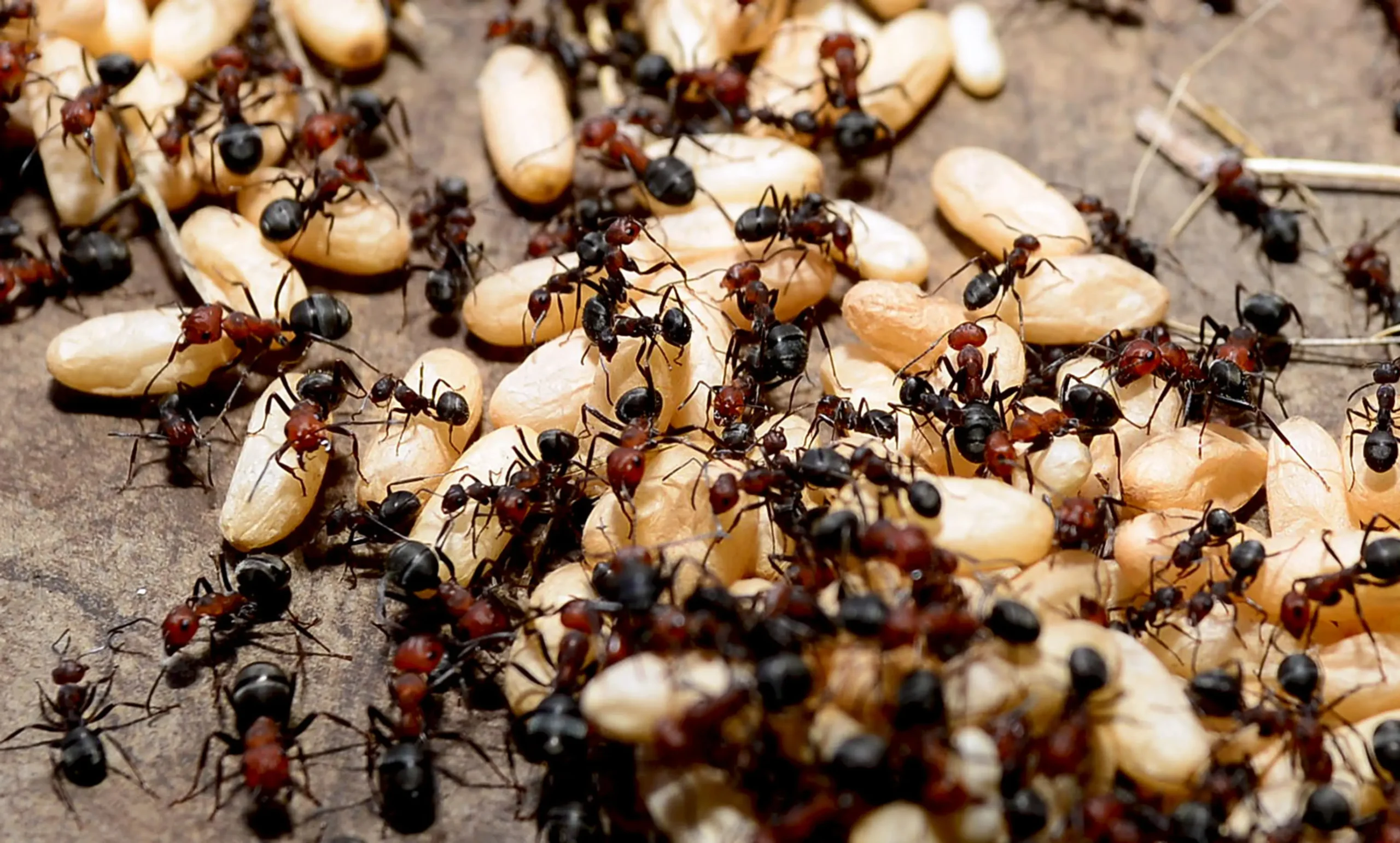
You cleaned the kitchen last night. Wiped the counters, swept the floor, put everything away. And this morning there’s a line of ants marching across your countertop like they own the place.
If you live anywhere along the Wasatch Front, this scene probably hits a little too close to home right about now. Every April, as soon as the ground thaws and daytime temps start holding above 50 degrees, the ants wake up. And they don’t waste any time.
Here’s what’s actually going on beneath your yard and what you can do about it before a few scouts turn into a full-blown kitchen takeover.
What Happens Underground in April
Ant colonies don’t die off in winter. They go dormant. The whole colony pulls deeper into the soil, slows their metabolism, and waits. The queen stops laying eggs. Workers stop foraging. Everything pauses.
Then the soil warms up. In the Salt Lake Valley, that usually starts happening in late March or early April depending on the year. Once temperatures at root level get above 50°F consistently, the colony flips back on. The queen starts producing eggs again. Workers head out looking for food and water. And the first place they check? The warm, dry perimeter of your foundation.
That’s why you see them suddenly — it feels like they appear overnight, but they’ve been right there all winter. You just couldn’t see them.
Which Ants Are in Your Utah Home?
Not all ants are the same, and knowing which species you’re dealing with matters because the treatment approach is different for each one.
Pavement Ants
These are the most common ones you’ll see in Salt Lake County homes. Small, dark brown, about 1/8 inch long. They nest in cracks in driveways, along sidewalks, and under foundation slabs. You’ll usually spot them in the kitchen or bathroom trailing along the edge of a wall or counter. They’re after anything sweet or greasy.
Odorous House Ants
Similar size to pavement ants but with one telltale sign — crush one and it smells like rotten coconut. Seriously. These ants form massive colonies with multiple queens, which makes them harder to eliminate. They love moisture, so you’ll often find them near sinks, dishwashers, and leaky pipes. Homes in Murray and Taylorsville with older plumbing see a lot of these.
Carpenter Ants
These are the big ones. Black, about half an inch long, and they don’t eat wood — they excavate it to build their nests. If you’re finding small piles of sawdust-like material near baseboards, window frames, or door jambs, that’s frass, and it means carpenter ants are tunneling through the wood in your home. They’re more common in homes near canyon mouths and along the east bench where there’s plenty of dead wood and moisture.
Carpenter ants are the ones that actually cause structural damage. The other two are mostly a nuisance — but “mostly a nuisance” still means ants in your cereal, so it’s worth dealing with all of them.
Why the Spray From the Hardware Store Isn’t Working
Here’s the thing about that can of ant spray under your sink: it kills the ants you can see. That’s it. And the ants you can see are maybe 10% of the colony. The rest are underground, in the walls, or nesting behind your cabinets. The queen is tucked away deep in the colony producing hundreds of eggs a day. Spraying the trail doesn’t touch her.
Worse, some repellent sprays actually split the colony. The ants sense the chemical, avoid that path, and establish a new trail somewhere else. Now instead of one ant problem, you’ve got two. We see this all the time with odorous house ants especially — they have multiple queens, so when the colony splits, both halves keep growing.
The other problem with DIY sprays in Utah specifically is our dry climate. Products break down faster here than they do in humid states. That spray you applied along the foundation last weekend? After a couple of hot, dry days, it’s already lost most of its effectiveness.
Professional Ant Treatment Actually Works
The approach we use at Signature Pest Control is fundamentally different from what you can buy at the store. Instead of repellent sprays, we use bait systems and non-repellent transfer products.
Bait works because ants carry it back to the colony and share it. Workers feed it to the queen and to the larvae. Within a week or two, the entire colony collapses from the inside. The ants do the distribution work for us.
Non-repellent treatments work on a similar principle — ants walk through the treated area without knowing it’s there, then transfer the product to other ants through normal contact. It spreads through the colony like a chain reaction.
We also treat the exterior perimeter of your home to create a barrier that stops new colonies from establishing. In a typical spring treatment, we’re hitting the foundation, entry points around doors and windows, utility penetrations, and any landscaping features that hold moisture close to the house. Mulch beds, rock borders, and ground cover are prime ant real estate.
What You Can Do Right Now
While you’re waiting for a professional treatment or if you want to reduce ant pressure on your own, these steps actually help:
- Wipe down counters and sweep floors daily — even small crumbs attract scouts
- Fix any leaky faucets or pipes, especially under sinks — ants need water as much as food
- Seal cracks around your foundation, door frames, and window frames with caulk
- Pull mulch and landscaping at least 6 inches away from your foundation
- Trim tree branches and shrubs that touch your house — ants use them as bridges
- Store food in sealed containers, not just clipped bags
These steps reduce what attracts ants and cut off some entry points. But if you’re already seeing steady trails inside your home, prevention alone won’t solve it. The colony is established and needs to be treated directly.
The Best Time to Treat Is Right Now
April is the sweet spot for ant treatment in Utah. The colonies have just woken up but haven’t hit full production yet. Treating now means you’re hitting them when they’re small and vulnerable. Wait until June and you’re dealing with colonies that have been growing for two months and are significantly harder to knock down.
We’ve been treating homes across Sandy, Riverton, Murray, West Jordan, and the rest of the Salt Lake Valley for over 30 years. If ants are showing up in your home this spring, give us a call at (801) 347-5272. We’ll come out, figure out which species you’re dealing with, and put together a treatment that actually solves the problem — not just the symptoms.
Call (801) 347-5272 for a free spring ant inspection.
Why do ants suddenly appear in my Utah home every spring?
As soil temperatures rise above 50°F in April, ant colonies that were dormant through winter become active and begin expanding. Worker ants scout for food and water sources, which often leads them indoors through foundation cracks, gaps around doors, and utility penetrations.
What types of ants are most common in Salt Lake City homes?
The three most common species are pavement ants (small, dark brown, found along foundations and in kitchens), odorous house ants (emit a rotten coconut smell when crushed), and carpenter ants (larger, black, can cause structural damage by tunneling through wood).
Do DIY ant sprays actually work in Utah?
Over-the-counter sprays may kill visible ants but rarely reach the colony. Most ant colonies in Utah contain thousands of workers and multiple queens. Professional treatment targets the colony directly using bait systems that workers carry back to the nest, eliminating the source.
How can I prevent ants from entering my home this spring?
Seal cracks around your foundation, doors, and windows. Keep food in airtight containers and clean up crumbs immediately. Trim landscaping away from your foundation and eliminate standing moisture near your home. For lasting protection, a professional perimeter treatment creates a barrier before ants find their way in.
When should I call a pest control professional for ants?
If you see a consistent trail of ants, find ants in multiple rooms, or notice large black carpenter ants, call a professional immediately. Early spring treatment is the most effective time to disrupt colonies before they fully establish for the season.