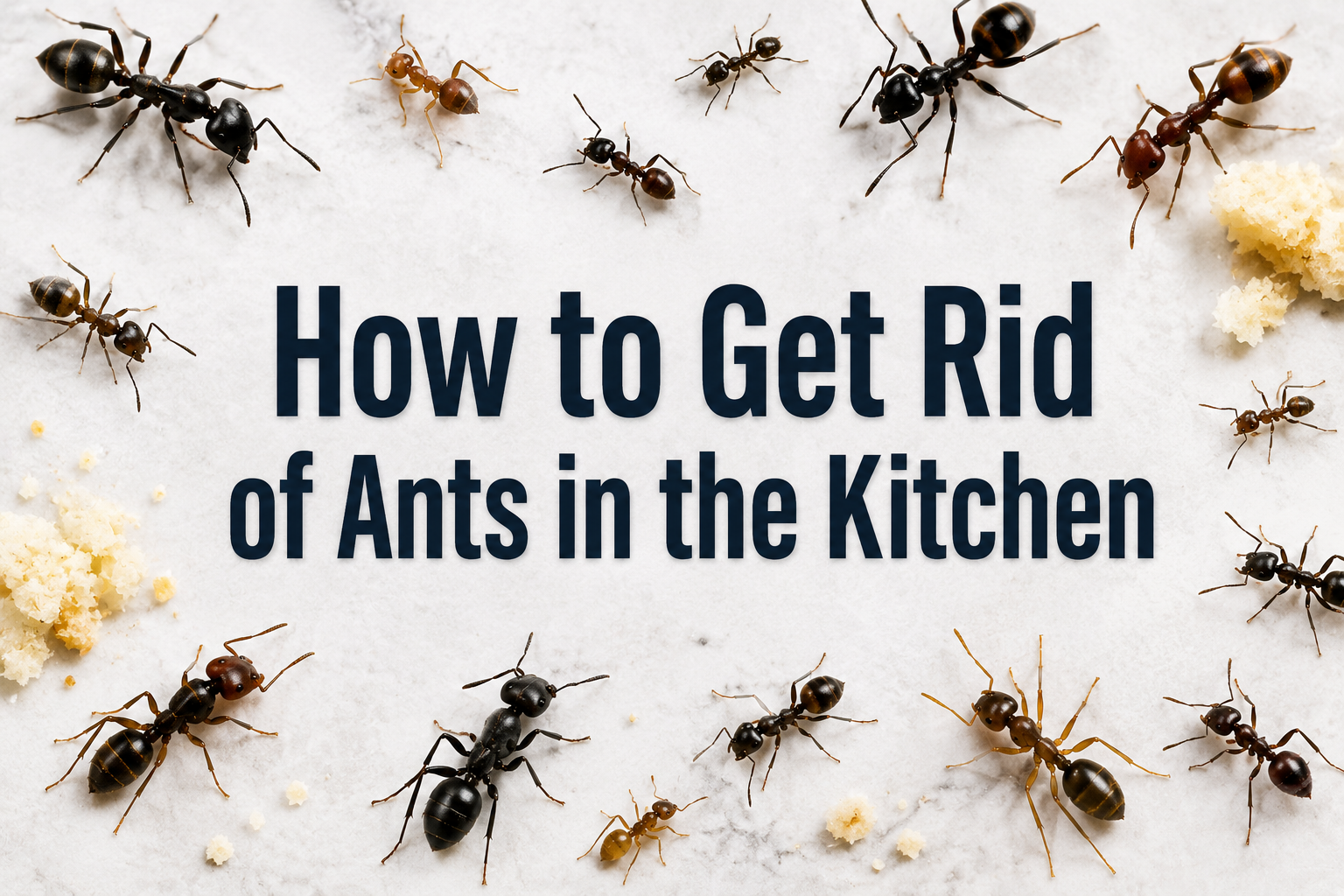
Few things are more frustrating than walking into your kitchen and finding a trail of ants marching across your countertop. One day everything looks normal, and the next you’re spotting ants around the sink, near pet food bowls, or crawling across the pantry shelf.
If you’ve been wondering how to get rid of ants in the kitchen, you’re not alone. Ant infestations are one of the most common pest problems homeowners face, especially as temperatures begin warming up in spring and summer.
The challenge is that simply killing the ants you can see rarely solves the problem. Most kitchen ant infestations start outside the home, and the ants entering your kitchen are often only a small part of a much larger colony.
This guide explains why ants invade kitchens, what attracts them, how to eliminate them, and how to prevent them from coming back.
Why Are Ants in My Kitchen?
The answer is simple: your kitchen provides everything ants need to survive.
Ants are constantly searching for:
- Food
- Water
- Shelter
Even the cleanest homes can attract ants if conditions are right.
Some of the most common kitchen attractants include:
- Crumbs under appliances
- Pet food left out overnight
- Sticky spills
- Fruit on countertops
- Unsealed pantry items
- Moisture around sinks
Once a scout ant finds a food source, it leaves behind a pheromone trail that directs other ants to the same location.
This is why you often see a steady line of ants traveling to and from the same area.
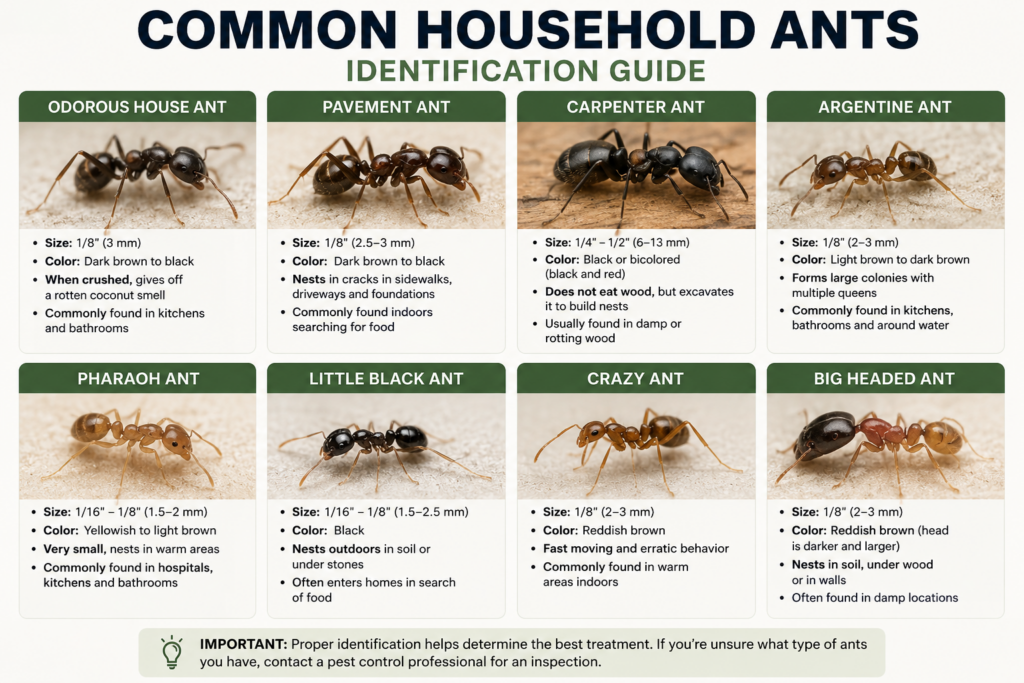
The Most Common Types of Ants Found Indoors
Not all ants behave the same way.
Odorous House Ants
One of the most common household ants.
They are attracted to sugary foods and often appear in kitchens and bathrooms.
When crushed, they emit a distinct odor.
Pavement Ants
These ants frequently enter homes through cracks in foundations and concrete.
They commonly nest beneath sidewalks, driveways, and patios.
Carpenter Ants
Unlike other ants, carpenter ants can damage wood structures.
While they don’t eat wood, they excavate it to build nests.
Large black ants inside the home should always be investigated.
Argentine Ants
Known for forming massive colonies.
They often establish multiple nesting locations and can be difficult to eliminate without professional treatment.
Signs You May Have a Larger Ant Problem
Many homeowners assume a few ants are no big deal.
However, visible ants often indicate a larger colony nearby.
Watch for these warning signs:
Ant Trails
Consistent trails leading to food or water sources.
Multiple Activity Areas
Seeing ants in several rooms rather than a single location.
Repeated Infestations
Ants returning shortly after cleaning or spraying.
Outdoor Colonies
Large numbers of ants around foundations, sidewalks, or landscaping.
Why Store-Bought Ant Sprays Often Fail
One of the biggest mistakes homeowners make is spraying the ants they see.
While this provides immediate satisfaction, it often makes the infestation worse.
Here’s why:
- Sprays only kill visible ants
- The colony remains intact
- Ants create new trails
- Colonies may split and expand
Professional pest control focuses on eliminating the source rather than treating symptoms.
Interactive Kitchen Ant Inspection Checklist
Walk through your kitchen and answer the following questions:
Food Sources
☐ Are crumbs present under appliances?
☐ Are pantry items stored in sealed containers?
☐ Is pet food left out overnight?
Water Sources
☐ Do you have dripping faucets?
☐ Is there moisture beneath sinks?
☐ Is condensation present near appliances?
Entry Points
☐ Are there gaps around windows?
☐ Are utility penetrations sealed?
☐ Are there cracks near baseboards?
Outdoor Conditions
☐ Are tree branches touching the home?
☐ Is mulch against the foundation?
☐ Are ant trails visible outdoors?
If you checked three or more boxes, your home is highly attractive to ants.
7 Effective Ways to Get Rid of Ants in the Kitchen
1. Identify the Food Source
Watch where ants are gathering and remove attractants immediately.
2. Clean Trails Thoroughly
Use soap and water or vinegar solutions to eliminate pheromone trails.
3. Store Food Properly
Transfer food into sealed containers whenever possible.
4. Fix Moisture Problems
Repair leaks and reduce standing water.
5. Seal Entry Points
Caulk gaps around windows, doors, and utility lines.
6. Address Outdoor Colonies
Many kitchen infestations originate outside.
Treating only indoors often produces temporary results.
7. Schedule Professional Ant Control
A professional pest control provider can identify nesting areas, eliminate colonies, and establish protective barriers around your home.
Why Ant Problems Often Return
Many homeowners successfully remove visible ants only to see them reappear weeks later.
This happens because:
- The queen survives
- Satellite colonies remain active
- Outdoor nests are untreated
- Entry points remain open
Long-term control requires addressing the entire colony.
The Signature Pest Control Ant Solution
Signature Pest Control provides comprehensive ant control services throughout Salt Lake City and surrounding communities.
Our ant control program includes:
- Detailed inspection
- Colony identification
- Exterior perimeter treatment
- Interior treatment as needed
- Ongoing preventative protection
Our goal is to eliminate the source of the infestation and help prevent future ant activity.
When Should You Call a Professional?
Contact a pest control professional if:
- Ants keep returning after treatment
- Activity spreads to multiple rooms
- Carpenter ants are present
- Outdoor colonies are extensive
- DIY methods fail
Early intervention prevents larger infestations later in the season.
Conclusion
If you’re wondering how to get rid of ants in the kitchen, the most important thing to remember is that the ants you see are only part of the problem.
Successful ant control requires eliminating food sources, sealing entry points, and addressing the colony itself.
With the right prevention strategies and professional support when needed, you can keep your kitchen clean, comfortable, and ant-free throughout the year.
If you’re dealing with recurring ant problems, contact Signature Pest Control for a professional inspection and customized treatment plan.